Fibre optic ducting installed in a service trench by KiKK Groundworks

NRSWA Accredited | London

Fibre Optic Installation London
Utilities & Street Works Contractor

KiKK Groundworks carries out fibre optic ducting, utility connections and street works across London under full NRSWA accreditation. Trenching, duct, chambers, no-dig crossings, and reinstatement built to SROH specification so the highway authority does not send you back.

NRSWA Accredited
Borough Permits Handled
SROH Reinstatement
Fully Insured
Happy customer 1
Happy customer 2
Happy customer 3
Happy customer 4

100+ Happy Customers

5.0 Rating
01603 381016

In London Street Works, the Reinstatement Is the Whole Game

Any contractor with a breaker and a mini digger can open a trench. What separates a street works contractor from a groundworker is what happens after the duct is in.

Under the Specification for the Reinstatement of Openings in Highways (the SROH), every reinstatement in the public highway carries a two-year guarantee, extended to three years where the excavation goes deeper than 1.5m. During that period the highway authority inspects. If the surface has cracked, if the levels have dropped, if the material or the layer thickness was wrong, they issue a defect notice and you go back and redo it. At your cost. With a fresh permit, fresh traffic management, and the disruption landing on your client's street a second time.

That is the risk a telecoms provider is really buying when it appoints a groundworks subcontractor in London. A cheap reinstatement is not cheap. It is deferred. KiKK builds reinstatements to the correct layer depths and the correct materials the first time: sub-base compacted in layers rather than tipped in, binder and surface course to the specified thickness, and the interim or permanent reinstatement completed to the category of road it sits in.

KiKK holds NRSWA accreditation, the legal requirement under the New Roads and Street Works Act 1991 for anyone excavating in the public highway. It is held directly, not subcontracted in from a third-party street works firm on paper. See the full range of groundworks services in London.

Fibre Ducting & Cable Routes

Service trench excavation in footway and carriageway, duct and sub-duct laying, jointing chambers and footway boxes, and preparation of clean pull-through routes for cabling teams. Ducts are laid to the correct cover depth, bedded and surrounded properly, and proved before backfill.

Directional Drilling & Moling

No-dig crossings under carriageways, driveways and mature root protection areas. Launch and reception pits either side, bore driven between them, duct pulled through. Less excavation, less reinstatement, shorter road occupation. On a lane rental road, a materially smaller bill.

Utility Connections

Water, gas, electricity and telecoms ducting from the main into the site or property. Excavation, ducting, ducted service routes, backfill and reinstatement, coordinated around the statutory undertaker's own connection date rather than working against it.

Reinstatement to SROH

Correct layer thicknesses, correct materials, correct compaction. Footway and carriageway reinstatements built to the specification the inspector will actually measure against, not made good and hoped for.

Permits, Red Routes and Lane Rental: the London Compliance Reality

London is not one highway authority. It is thirty-three, plus Transport for London. Every borough operates its own permit scheme with its own notice periods, works categories and conditions, and the borough that grants the permit is the borough that inspects the reinstatement.

Where the route touches a red route, the borough is not the authority at all. Red routes form the Transport for London Road Network, and consent comes from TfL. Conditions are tighter, working windows are restricted, and on the busiest TfL corridors lane rental applies: a daily charge for occupying a lane during the charging hours. Work the wrong road at the wrong time of day and the charge alone can dwarf the value of the excavation. It has to be designed out at programme stage: night works, weekend windows, or a no-dig crossing that avoids taking the lane in the first place.

Residential boroughs bring the opposite constraint. Noise and working hour restrictions mean breaking out at seven in the morning outside a terrace is not always an option, and some jobs can only run in a narrow daytime window. Plant and muck-away movements have their own overhead: ULEZ applies across all of Greater London, and the Direct Vision Standard requires HGVs entering London to hold a permit based on the driver's direct field of vision, with a Progressive Safe System fitted where the rating is low. A haulier who has not dealt with that turns up and cannot legally make the delivery.

KiKK manages the permit application, the conditions attached to it, and the traffic management that satisfies them, so the client is not fielding calls from a borough highways inspector.

Borough Permit Schemes

Every London borough runs its own permit scheme with its own notice periods and conditions. KiKK submits the application, agrees the works category and duration, and manages the conditions attached to it.

Traffic Management

Signing, lighting and guarding to Chapter 8, safe pedestrian routes past footway excavations, and ramped crossing points where the footway is closed. Pedestrian safety is where footway jobs get shut down.

Safe Digging to HSG47

Utility record plans obtained and read, route CAT and genny scanned and marked, trial holes hand-dug to prove services. In London the plans are frequently incomplete, so the trial hole is what we dig to.

The Most Congested Ground in the Country

Beneath a London footway you can reasonably expect Victorian water and combined sewers, gas, low and high voltage power, multiple generations of telecoms duct, street lighting cable, and in places tube tunnels, buried river culverts and structures nobody has a record of. Utility record plans exist, but in inner London they are frequently incomplete, out of date, or simply wrong about depth.

A service strike is not a delay. It is an incident. So the sequence before any mechanical excavation is fixed: statutory undertakers' plans and C2 utility searches obtained and read, the route CAT and genny scanned and marked on the surface, and trial holes hand-dug to physically prove position and depth. HSG47, the HSE guidance on avoiding danger from underground services, is the standard, and it exists precisely because the drawing is not the ground.

Where the route has to cross a carriageway or a driveway, directional drilling and moling avoid the problem rather than manage it: a bore is driven between two small pits and the duct pulled through, with no full-width excavation and no full-width reinstatement to guarantee for two years afterwards. On a congested or a lane rental street, that is usually the right call. Where trenching is unavoidable, the excavation is supported and the drainage and existing services around it protected properly.

Footway and Carriageway Are Not the Same Job

A carriageway reinstatement is built for traffic loading: sub-base, binder course and surface course to the layer depths set by the road category, compacted properly, with the interim reinstatement replaced by the permanent one within the allowed period. A footway reinstatement is a different construction, a different specification, and a different set of inspection criteria. And pedestrian safety around an open footway excavation is the thing that gets a job stopped fastest.

London adds a constraint most contractors do not anticipate. Across conservation areas (and there are hundreds of them, right through the inner boroughs) the footway is not blacktop. It is yorkstone flags, or granite setts, or granite kerbs, and the borough will not accept tarmac patched into it. Those units have to be carefully lifted whole, stacked, stored, and relaid on the correct bedding, matched, and set to level and fall. Break them and the borough expects replacement in matching stone, which is neither quick nor cheap.

A contractor who has only laid duct in modern tarmac footways will lift half of them broken on day one. That is the kind of detail that turns a two-day permit into a five-day one, and it is worth confirming your subcontractor has thought about it before the first flag comes up.

Fibre Optic & Utilities Gallery

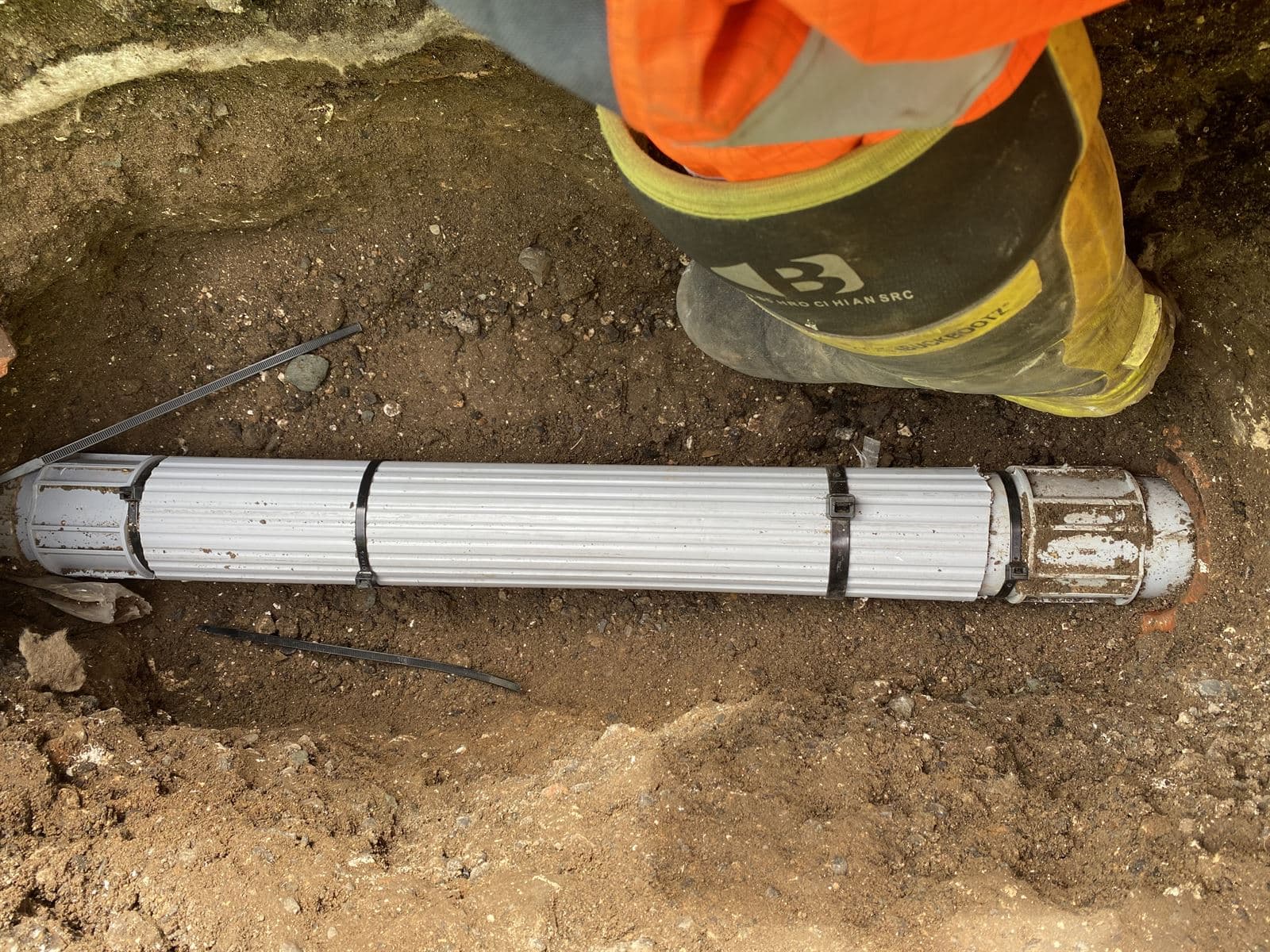
Fibre optic multiduct bundle laid and strapped in a service trench by KiKK Groundworks
Fibre optic ducting laid in a footpath service trench by KiKK Groundworks
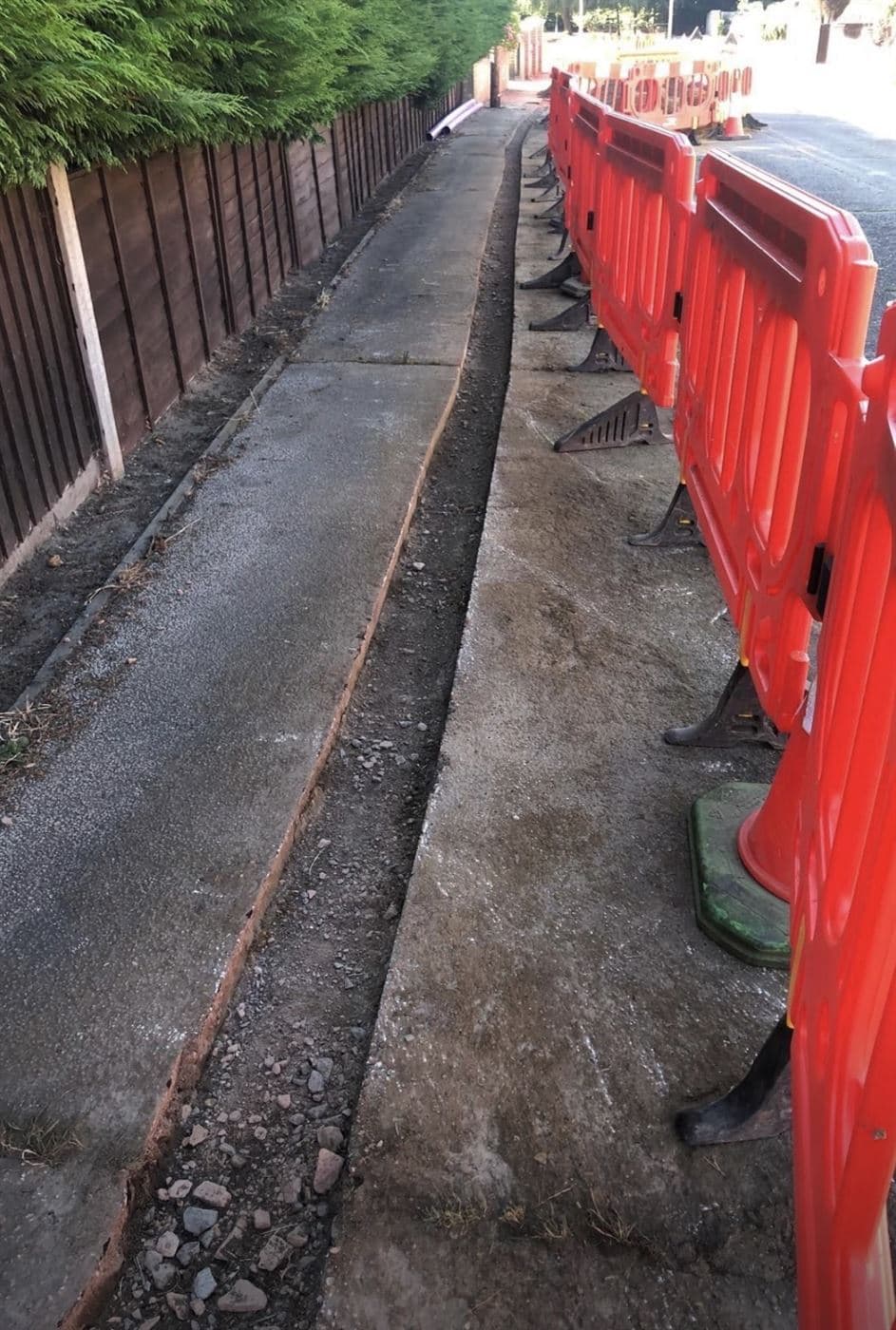
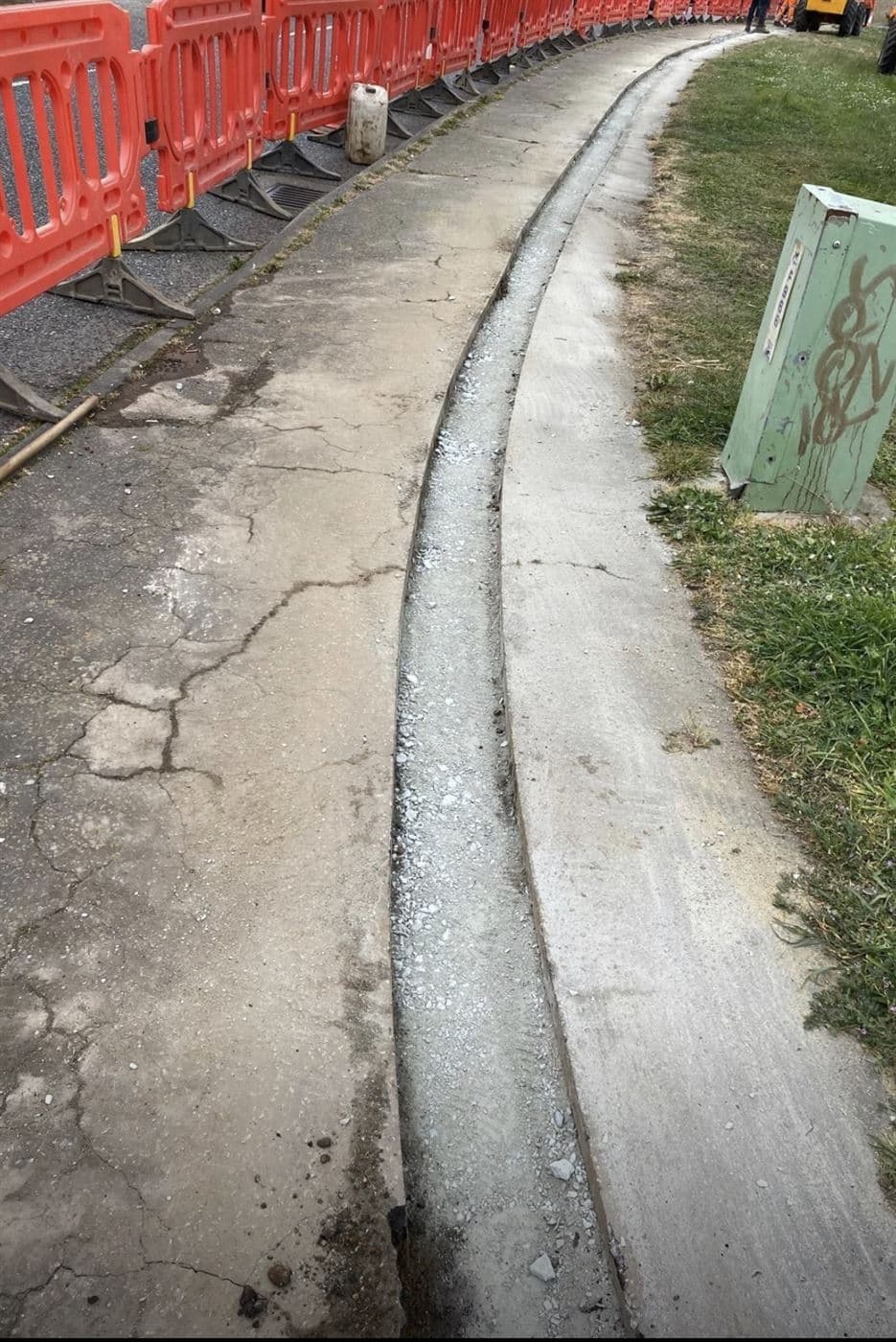
Narrow fibre optic trench cut along a footpath under traffic management
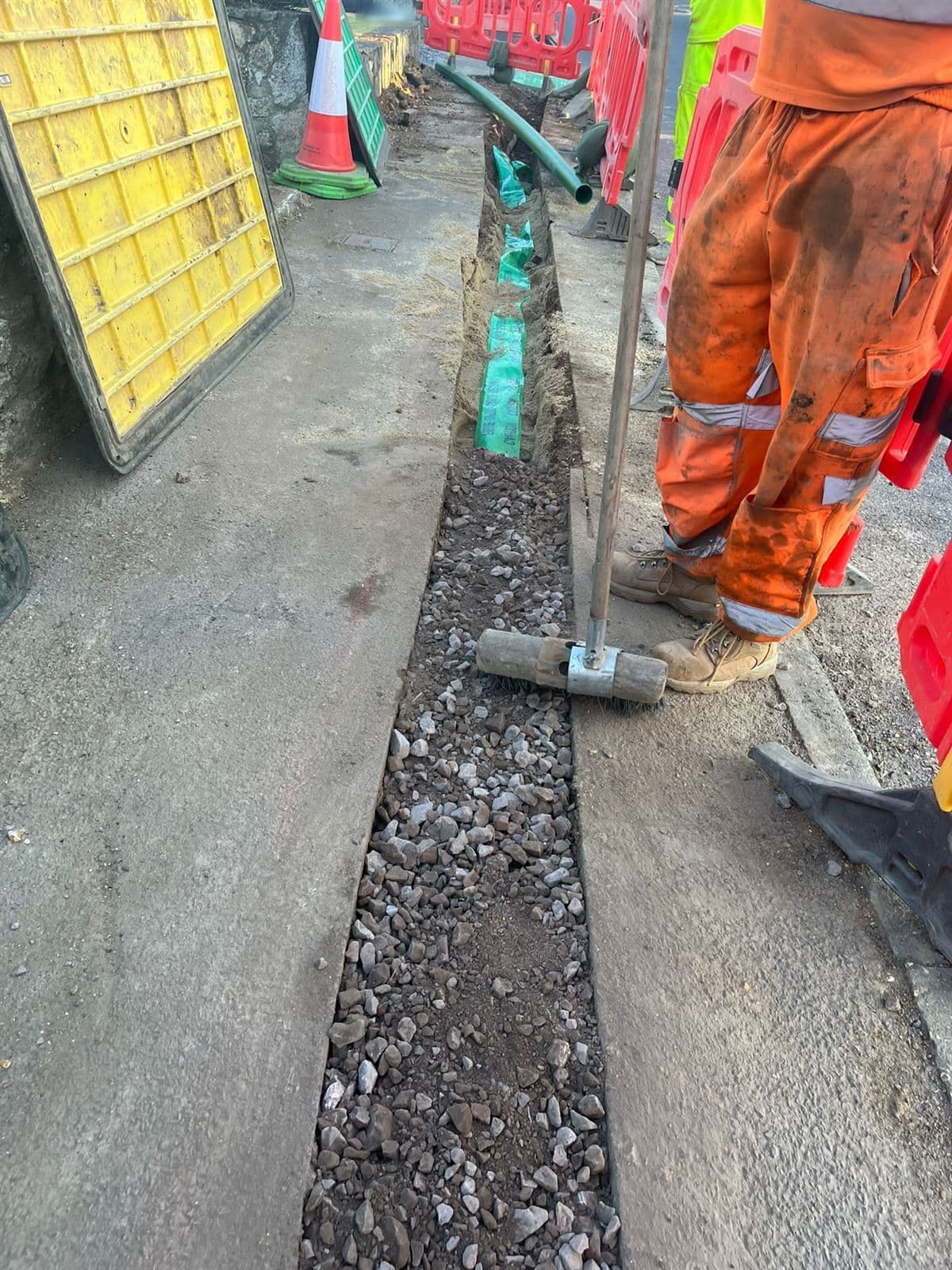
Utility trench backfilled with compacted Type 1 stone over marker tape
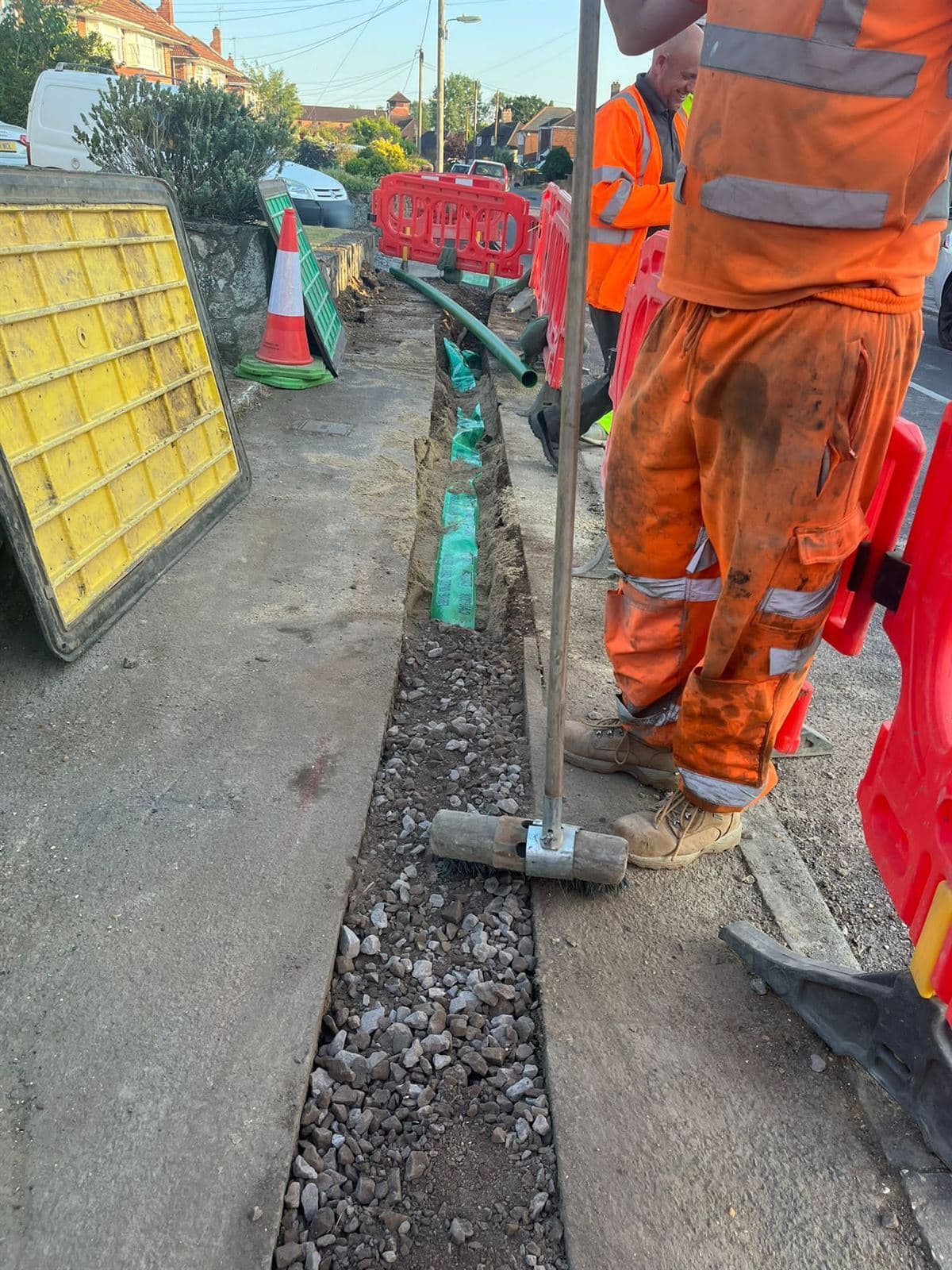
NRSWA accredited team installing utility ducting under traffic management
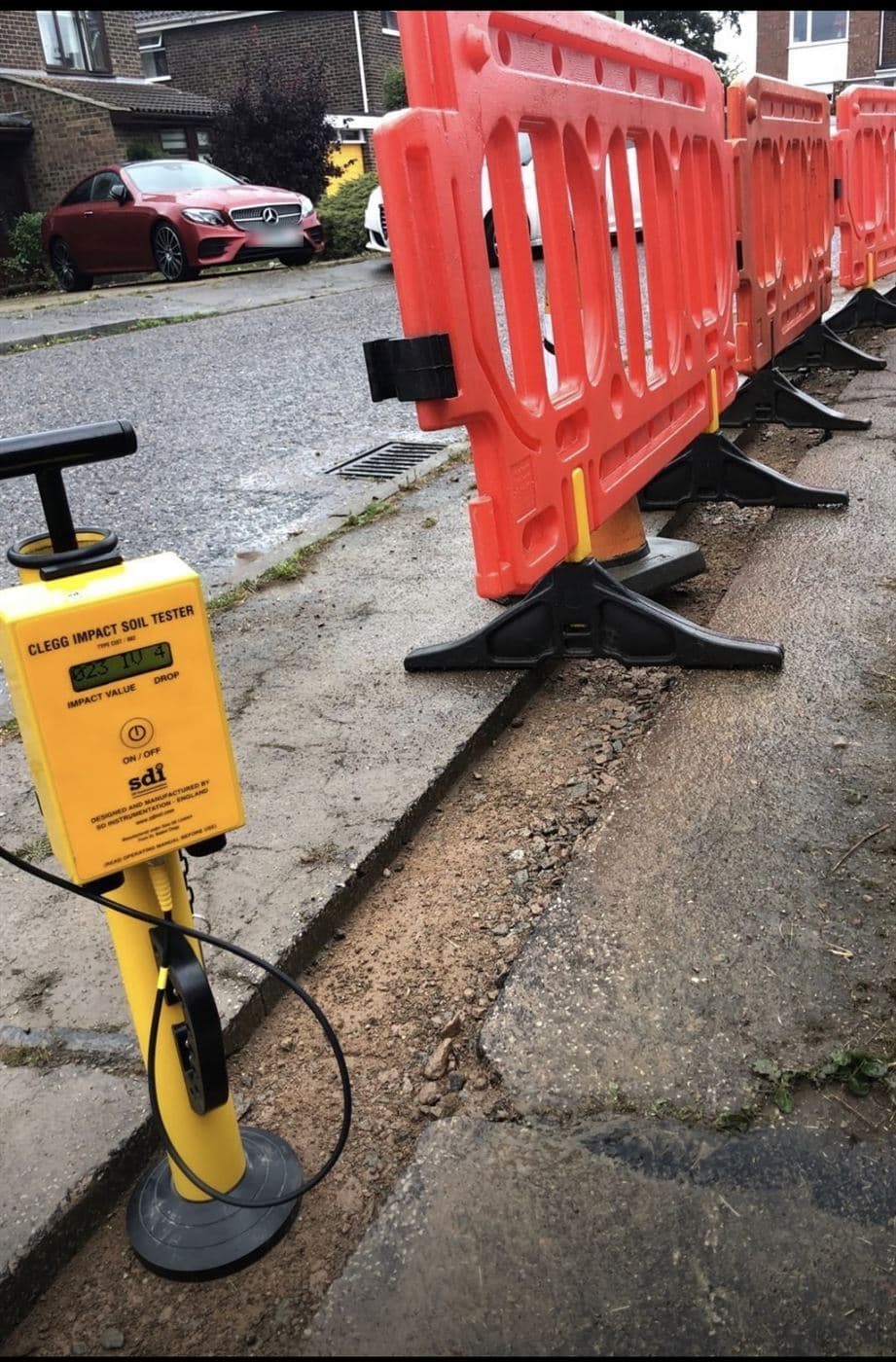
Clegg impact soil tester checking compaction on a completed reinstatement

Who KiKK Works For in London

This is contractor-facing work. The client is usually the party carrying the programme risk.

Telecoms Providers, ISPs & Altnets

Groundworks subcontract on fibre build programmes: duct, chambers, crossings and reinstatement, delivered under our own NRSWA accreditation rather than passed down another tier.

Main Contractors & Developers

Site utility infrastructure and the highway connection under one contract, so the private-land groundworks and the street works are not sitting with two firms and a scheduling gap between them.

Utility Companies & Commercial Property

New and upgraded connections into commercial premises, and service diversions where a development route conflicts with existing apparatus in the highway.

Where a development needs the service trench, the deep drainage and the foundations and underpinning handled as one package, KiKK takes the whole groundworks scope rather than the utility route in isolation.

Why KiKK

Why KiKK for Fibre Optic & Utilities in London

NRSWA Accredited

The legal requirement for excavating in the public highway. Held directly, not borrowed from a third-party street works firm.

Reinstated to Spec First Time

Built to SROH layer depths and materials so the two-year guarantee period passes without a defect notice bringing you back.

Owner-Led

Kallan is on site and accountable for the works. No layers of project management between the client and the excavation.

Permits Handled

Borough permit applications, TfL consent where the route touches the red route network, and the conditions that come with both.

Services Proved, Not Assumed

C2 and utility record searches, CAT scanning and hand-dug trial holes before any mechanical excavation starts.

Fully Insured

Full public liability cover, with traffic management and pedestrian safety planned into the method statement, not bolted on.

Fibre or Utility Works Coming Up in London?

Send the route and the programme. Call Kallan directly to talk through permits, crossings and reinstatement.

01603 381016

London Areas Covered

KiKK carries out fibre optic and utility groundworks across Greater London: the borough highway network and, where consent allows, the TfL road network.

Central LondonCity of LondonCamdenIslingtonHackneyTower HamletsSouthwarkLambethWandsworthWestminsterKensington & ChelseaHammersmith & FulhamBrentEalingHaringeyGreenwichLewishamNewhamCroydonBarnet

FAQ

Fibre Optic & Utilities London | Contractor FAQs

Yes. KiKK holds NRSWA accreditation, which is the legal requirement under the New Roads and Street Works Act 1991 for anyone excavating in the public highway. Operatives are qualified for the units relevant to the work: excavation, reinstatement and signing, lighting and guarding. A qualified supervisor is accountable for each site. Without it, no London highway authority will let you open the road.

Yes. Every London borough operates a permit scheme, and each has its own notice periods and conditions. KiKK submits the permit application, agrees the works category and duration, and manages any conditions the authority attaches: working hours, traffic management, reinstatement inspection. You do not need to deal with the highways team yourself.

Red routes are part of the Transport for London Road Network, not the borough network, so consent comes from TfL rather than the council. Conditions are tighter: restricted working windows, often night or weekend only, and on the busiest sections lane rental charges apply per day during charging hours. That cost has to be designed out at programme stage, not discovered on site. KiKK plans red route works around the charging windows.

The Specification for the Reinstatement of Openings in Highways (SROH). Reinstatement carries a two-year guarantee, extended to three years where the excavation is deeper than 1.5m. If the surface fails or the levels drop inside that period, the authority instructs you back to redo it at your own cost. KiKK reinstates to the correct layer thicknesses and materials first time so the guarantee period passes without a defect notice.

Yes. Directional drilling and impact moling let us install duct beneath a carriageway, driveway or footway without opening the full width. Launch and reception pits go in either side, the bore is driven between them, and the duct is pulled through. That means less excavation, less reinstatement, shorter road occupation, and lower permit and lane rental exposure. On a busy London street that is often the deciding factor.

London has the most congested subsurface in the country. We work to HSG47: statutory undertakers' plans are obtained and read before mobilisation, the route is CAT and genny scanned, marked up, and trial holes are hand-dug to physically prove the position and depth of anything the plans show, and anything they do not. Plans in London are frequently incomplete, so the trial hole, not the drawing, is what we dig to.

Other Services

Explore Our Other London Services

Talk to an NRSWA Contractor About Your London Route

Telecoms provider, main contractor or utility company needing accredited groundworks in London? Call Kallan directly and we will talk through the permit, the crossings and the reinstatement before anyone prices it.

01603 381016

Mon–Sat 7am–6pm | Greater London covered